The Golden Sun Moth is a vulnerable species endemic to south-eastern NSW, the ACT and Victoria. With Golden Sun Moth conservation sites across Hume, Brimbank, Wyndham and Whittlesea, the insect has cemented its home in Melbourne’s north-west. However the moth is still under threat from increased development in the region. Sam Porter spoke to Hume council’s conservations program supervisor Eric Stone about the insect and the Golden Sun Moth conservation site in Craigieburn.
Part of the reason why Golden Sun Moth numbers are so hard to accurately record is because the insect is only alive for one to four days. Born without mouthparts, the moth cannot eat and has one sole purpose in its few days as a mature adult — to find a mate and reproduce.
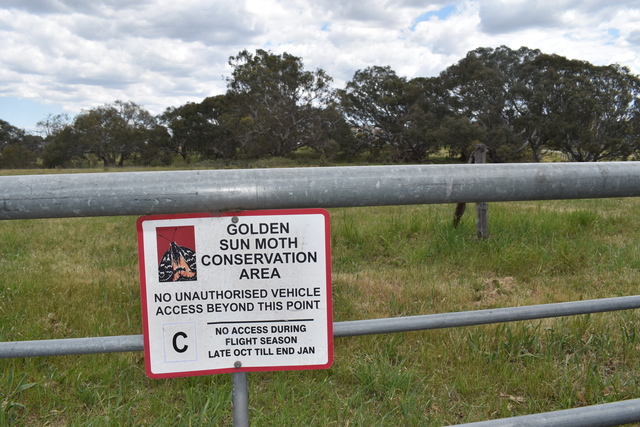
In Melbourne’s northern suburb of Craigieburn the moth has found a sanctuary at a 44-hectare conservation site. The reserve was sectioned off as part of a 2009 federal government condition of approval when granting land developer, Stockland, permission to develop the Highlands Estate.
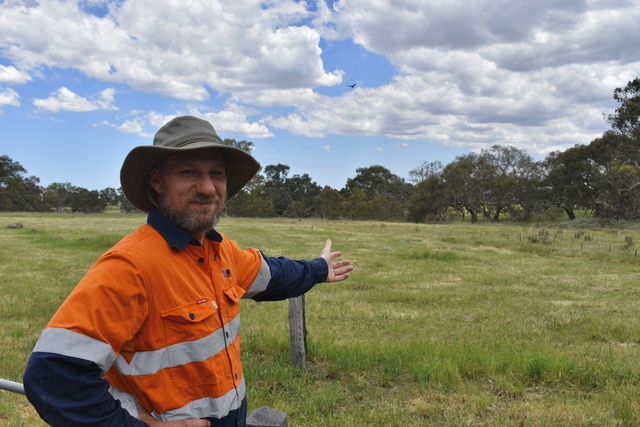
Eric Stone is a conservations program supervisor at Hume council and co-manages the site alongside numerous nature reserves in the east of Hume.
“Realistically, that organism is only a moth for a very small percentage of its life cycle…. the rest of the time that organism is actually under the ground as a grub,” he said.
“They can be under the ground for definitely one year, maybe two, maybe three years. We’re not sure how long they can be under there for.”
The Craigieburn reserve is an environmental offset created to compensate for significant biodiversity loss caused by land development.
Hume council took on responsibility for the reserve after Stockland’s approval condition expired in 2020.
In the same year, the moth’s classification was downgraded from critically endangered to vulnerable in Victoria due to increased conservation efforts.
However, increasing housing development projects pose ongoing risks to the moth and its natural grasslands habitat, and so ecologists, developers, local communities and government are making concerted efforts to protect the native ecosystem in these growing regions.
“I think that in high growth areas, like Hume, you need to carefully consider the impacts that that’s going to have on nature,” Eric said.
The biggest part of Eric’s role is managing the contractors who do the physical work at the site such as mowing back grasses to encourage moth reproduction.
“The reason that we do that is to reduce the biomass and give the moths that space that they need to fly around to recognise each other.”
During the reproductive season, from mid-October to January, male moths fly above tussock grasses, looking for signals from females crawling in between grasses on the ground.
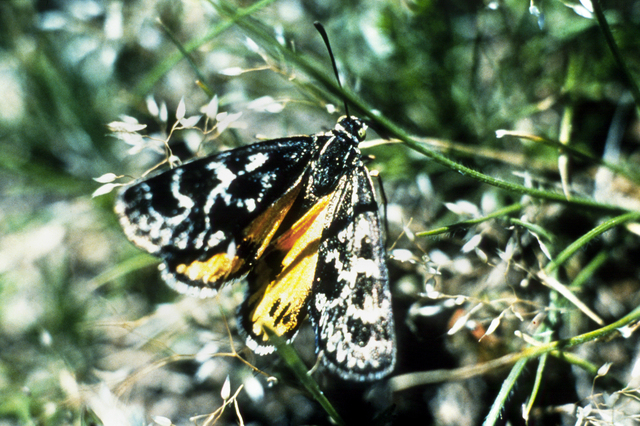
“[The female’s] wings have a sort of little golden splash on them and that’s why they call them Golden Sun Moths,” Eric said.
“The females will sense the male flying around and they’ll give that little flash of the wings, and they can find each other.
“If the grass gets too long, then they can’t do that so we mow it this time of year just before the season starts.”
If moths successfully mate the female will lay her eggs at the base of the tussock grass.
The most common grass at the Craigieburn site is the non-native Chilean needle grass which the moth has quickly taken to.
“Golden Sun Moth is a bit of an anomaly in that it’s actually able to thrive in Chilean needle grass which is, in many other places, considered a fairly bad weed,” Eric said.
When the weather conditions are right and the moth larva is ready for its next life phase, it will migrate to the surface of the soil and undergo pupation.
Every few years, Eric and his colleagues conduct surveys to track seasonal variations and Golden Sun Moth numbers at the reserve.
“We’re not trying to count all of the moths in the reserve. We’re trying to gather data over successive years about how many we can see from a certain set of viewpoints in a reserve,” Eric said.
Surveys are conducted on days with favourable weather conditions for moth activity, and moths are counted within the same marked areas across the site.
“You’re counting the amount of moths that you can see flying around within a certain time period, maybe five minutes, and you’ll generally have at least two people so that you can see in different directions.”
Eric said climate change could be detrimental to the Golden Sun Moth’s survival especially for populations living in small, isolated urban areas surrounded by housing or roads.
“If something happens like it gets a lot wetter, or it gets a lot drier, maybe some of its core food plants drop out of those systems, those moths can drop out of the system as well because they haven’t got enough alternatives in the landscape, and they can’t travel very far.
“The males can possibly fly up to about 400 metres at a stretch. The female is nowhere near that. They can’t cross things like suburbs and extensive roads and car parks and form new populations easily elsewhere,“ Eric said.
“I think [the conservation site at Craigieburn is] an example of a good offset for Golden Sun Moths because it’s large, it’s interconnected with other reserves, and there’s some variable habitat in here so that we can create different conditions.
“The great thing about an offset like this is we can do more than protect and preserve a Golden Sun Moth population. We can protect, preserve and improve other aspects of the natural environment as well.”
Eric was asked why the Golden Sun Moth is important.
“It’s a bit of a philosophical question,” he replied.
“I do think that there is something strange about the way we rate the importance of nature. There tends to be a situation where we’ll wait for something to become really endangered, and then suddenly we’ll consider it to be really important and worth protecting, but it seems to me it would be better to protect nature before it becomes critically endangered than try to do so afterwards.
“[The Golden Sun Moth] is not really more important than all of the other creatures and plants and ecology that also could become critically endangered if we don’t protect it. It’s a part of these ecosystems, and it has its role.
“But really it’s a question of, ‘do you think ecosystems are important? Do you think that they have a function in our modern society?’ Because if the answer is yes, well, then the Golden Sun Moth is important just like the rest.”