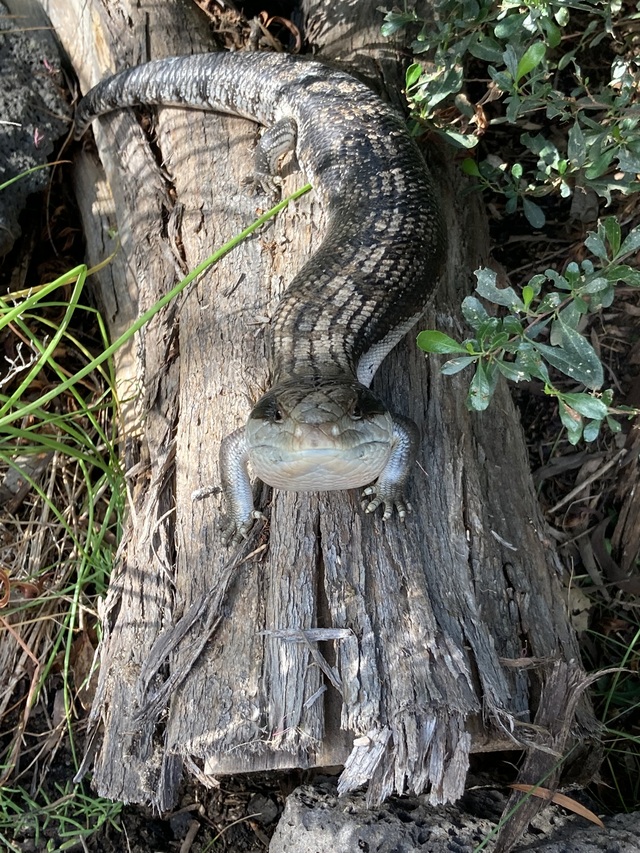
Spotting a blue-tongue lizard might cause a fright but it is no reason to be concerned, according to a nature educator.
Susie Inglis from Nature West is encouraging people in the western suburbs to take a few steps to ensure minimal harm comes to the species which can often be mistaken for snakes.
While being mostly harmless to humans, Ms Inglis said people often assume blue-tongue lizards are aggressive.
“To people who don’t know them, they are often misunderstood as a danger to humans and pets, or mistaken for snakes, evoking panic,” Ms Inglis said.
“But as many of us know, blue-tongue lizards are harmless to humans and can be a great garden buddy, as they love to eat snails, slugs and many other garden pests.
“Although you may also notice some of your strawberries are missing if they were close to the ground, they usually live harmoniously in your garden without bothering you or your pets.
“Eastern blue-tongue lizards have strips like some snakes, such as the Tiger snake; and although they both make a hissing sound when threatened, this is where their similarities end.
“Blue-tongue lizards differ from snakes in the most obvious way, as they have legs, with five fingers and five toes.”
However, some pets don’t tend to view the largest skink species as neighbours, Ms Inglis said.
“They need to be protected from dogs, who often see them as a threat …not the dog’s fault, just two species that shouldn’t be in the same space together,” she said.
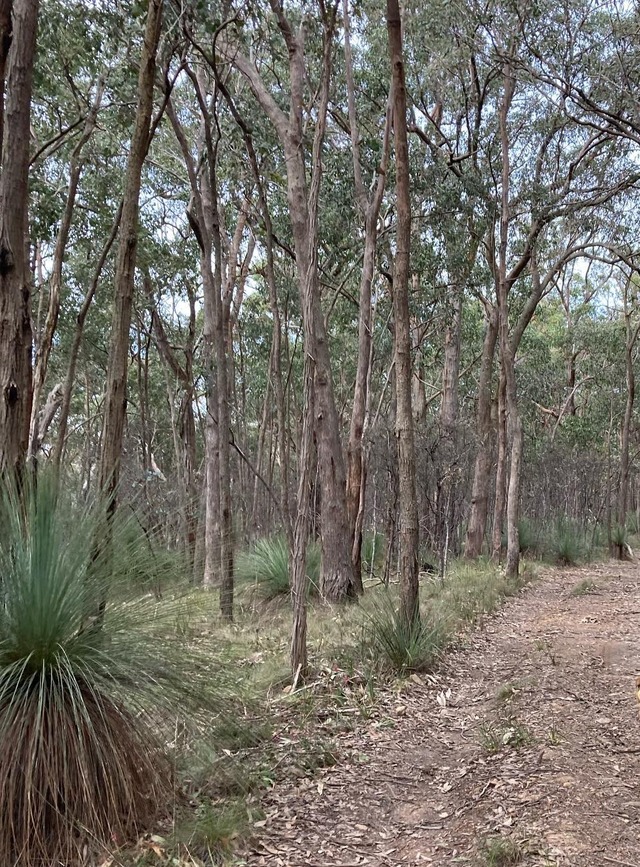
“Keeping cats indoors and providing places of protection for lizards and skinks in your garden, such as rocks, logs and low vegetation like Australian tussock grasses, can help them live happily in urban environments.”
If pets may be a threat to the lizard, a protected native species, Ms Inglis recommends moving them from the backyard to front yard.
“They are protected native species and are not allowed to be relocated, unless by a licensed reptile handler, usually a snake catcher,” she said.
Another major and potentially lethal danger for the blue-tongue are bait pellets used for snails and rats, of which the lizards may mistake as edible, Ms Inglis said.