This article was originally published on 6 May. Star Weekly is sharing it again for you to enjoy.
PRECEDE: Thomastown Neighbourhood House manger Liz Skitch runs a community hub from a room inside the local library, offering connection, creativity, and crisis support.
Tom Ingleton spoke with Liz about mental health, hidden trauma, and why neighbourhood houses are crucial – but under resourced – pillars of community care.
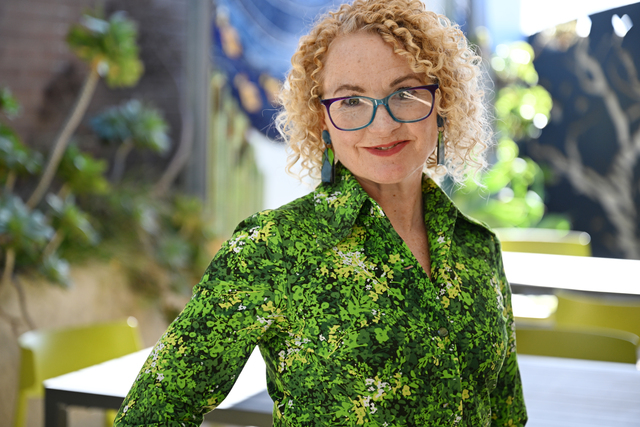
Tucked away in a quiet room inside the Thomastown Library, you’ll find what might just be the suburb’s most essential service – though most people don’t realise it until they walk through the door.
There’s mental health slogans, and then there are mental health saviours and the latter certainly applies to the Thomastown Neighbourhood House.
“We didn’t know you were here!” is the most common thing people say when they discover the neighbourhood house, manager Liz Skitch says.
But once they do, it doesn’t take long for the truth to land.
Across Victoria, mental health services are overwhelmed and recent studies highlight this epidemic is only getting worse.
According to the Australian Bureau of Statistics, one in five Australians will experience a mental illness this year, yet in outer-metro areas like Whittlesea, access to psychologists remains critically low– just 2.2 per 1000 people.
Liz is many things to the community – actress, comedian and an award-winning performer – one thing she is not though is a psychologist.
However, she is very often the first point of contact for individuals in distress at the neighbourhood house.
“You give me a reason to leave the house,” one regular told her.
Another: “Thanks to your playgroup, I now have friends all over the neighbourhood.”
In a time marked by skyrocketing loneliness, cost-of-living stress and the long tail of the Covid-19 pandemic, places like this – warm, inclusive, and quietly revolutionary – are holding communities together.
And they’re doing it under the radar, on shoestring budgets, and with a kind of fierce love that can’t be faked.
When someone walks in clearly struggling, Liz doesn’t offer a script.
“I listen. Then if I can help – I do,” Liz says.
“The heart-breaking thing is that more often than not, the best we can do is provide a safe space and a phone number to a better resourced organisation.”
What Liz wishes for is modest but urgent: a social worker on-site, food vouchers to give, transport for those who are stranded and can’t access services.
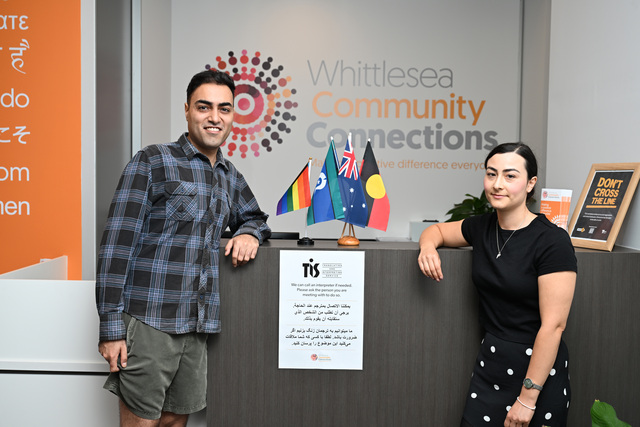
“We do our best to partner with organisations like Foodbank and Whittlesea Community Connections but this is not enough.”
In that one sentence is the quiet frustration of countless front-line workers across Victoria, who are holding space for others while burning out themselves.
One moment that stayed with Liz this year happened in a surprise setting – the Death Cafè.
It’s one of Thomastown Neighbourhood House’s more unconventional offerings, a philosophy-based program that facilitates conversations about end of life.
“One of the women shared how she lost her daughter to leukaemia, many years ago,” Liz recalls.
“I was struck by her resilience and her creativity. Despite her grief, she’s committed to her community. It reminded me you never know what someone’s carrying.”
It’s a lesson that echoes across the programs the centre runs – from playgroups and craft workshops to dance classes and legal aid visits.
The weight of people’s stories isn’t always visible.
But it’s there.
Since the pandemic, GPS and psychologists have increasingly referred patients to neighbourhood houses for what some countries call “green scripts” which directs patients to attend places doing activities that boost social cohesion and wellbeing without ever feeling like clinical intervention.
“Social cohesion is at an all-time low. Loneliness is at an all-time high,” Liz says.
“But when a new participant joins our group, we focus on their strengths. Before long, we can see confidence grow and friendships flourish,
“When you are feeling broken, the way to healing is through helping others.”
It’s healing through connection – and often, through creativity.
One of Liz’s highlights each week is a Monday afternoon dance party called Lets Move for young adults with disabilities.
“It’s pure joy,” Liz says.
“That’s how I keep going – friendship and creativity.”
But Liz didn’t enter this role at a gentle time.
She became manager mid-pandemic, when all the programs were shut down and the focus turned to emergency food relief.
Suddenly, she was running a pantry out of the library foyer five days a week, with food lines stretching toward the nearby sports fields.
“I felt out of my depth every day,” Liz admits.
“It was like trying to fill a bottomless well.”
The need hasn’t eased.
If anything, it’s grown.
Now, with the cost-of-living crisis biting harder, the support of partners like Foodbank Victoria – which brings its mobile supermarket to Thomastown on Wednesdays – has become essential.
But so too has the advocacy for more sustainable support.
When asked what she wants politicians and mental health services to understand, Liz doesn’t hesitate.
“Neighbourhood houses provide a sense of belonging and purpose – which is often the key to overcoming mental health challenges from depression and loneliness, to stress and anxiety,” Liz says.
“We provide safe spaces for people. But across Victoria, most neighbourhood house managers are working full-time hours in part-time roles. Burn-out is common. It’s not sustainable.”
Liz believes every house should have at least two staff present at all times to ensure safety and adequately support the wide range of services they provide.
And in Thomastown, there is a desperate need for a larger space.
“We’re grateful to the City of Whittlesea and the state government for the support we do have,” Liz adds.
“But demand is surging, and our capacity hasn’t grown with it.”
It’s a confronting question – what would happen if Thomastown Neighbourhood House didn’t exist?
“There are very few spaces people can go to for free without feeling pressure to spend money,” Liz says.
“Shopping centres have become the default for when we have free time these days.”
Liz is also a passionate advocate for public outdoor spaces, encouraging locals to kick a ball around at the oval, explore local parks or visit the new Whittlesea Gardens skate park.
In a community where many women are migrants, caregivers, or survivors of trauma – including family violence – the role of Thomastown Neighbourhood House is bigger than just activity programs.
“We see people rebuild confidence here,” Liz says.
“We see healing. Sometimes people come in quiet and withdrawn and a few months later, they’re running art class.”
Asked if she ever worries about her own mental health and carrying the emotional toll of caring for others, Liz is candid: “Stress and anxiety – it’s a big one for me. But I try to remember to breathe”.
And perhaps that’s the greatest power of neighbourhood houses like this one, they don’t just help others find stability – they model what compassion looks like in action, and yet community organisations like Liz’s are chronically underfunded and under-recognised.
As Liz states in a simple yet poignant truth “Neighbourhood houses are more important than ever.”