
On 2 April, 1852, the Nelson, a 603 ton barque commanded by Captain Walter Wright, was anchored near the Williamstown breakwater, ready to sail to London.
In the ship’s lazarette were 23 packages containing over 8,000 ounces of gold dust and nuggets on consignment from Geelong, where some of the crew had jumped ship to head off to the Mount Alexander diggings.
Arriving at Williamstown, Captain Wright went ashore, leaving on board Chief Officer Henry Draper, Second Mate Carr Dudley, the cook, the cabin boy, the carpenter and two seamen, plus Second Mate William Davies, who was visiting from another moored vessel.
Strangely, Captain Wright left no instructions about security for the gold or who was to keep watch, even though, according to maritime law, bullion had to be safely guarded on the eve before sailing.
Draper, Dudley, and Davies whiled away the hours with cards and drink. At 11pm they retired for the night.
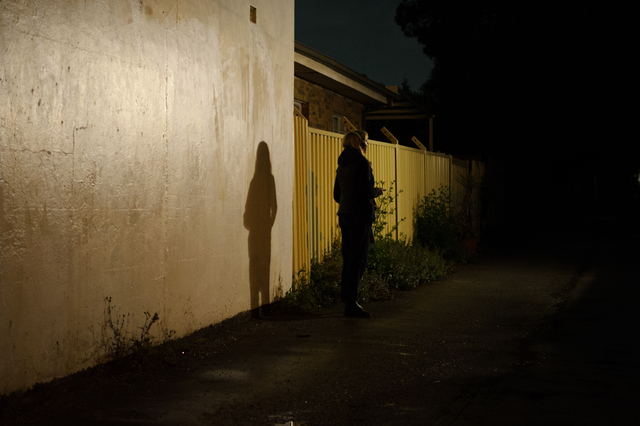
At about 2 am, the cook, then strolling on the deck, was shocked to see two whaleboats in the gloom, rowed by muffled oars. With no time to raise the alarm, he shinned up the rigging and remained quietly there. The ruffians, whom he estimated to number a dozen or more, quietly climbed a ladder left hanging over the side.
The first mate was awoken by a lantern in his face and a snarling voice demanding to know where the gold was.
A man of integrity, Draper refused to say a word.
A pistol held to his head, a sword jabbed into his ribs and a bullet fired at his thigh soon persuaded him that being a hero was a most unwise course of action.
The ship swarmed with men who were heavily armed and with handkerchiefs tied around their faces. Draper was forced to surrender the 23 gold boxes. The leader of the pirate gang was in a generous mood and held out one of them.
“Here,” he allegedly said to Draper. “Help yourself. Nobody will be any the wiser.” Draper refused.
All on board, except the hidden cook, had their hands tied behind their backs and were forced into the lazarette and the hatches fastened. . Weapons were seized and heaved overboard, including the cannons, which created a mighty splash as they struck the waters of Hobsons Bay.
The heist was carried out with customs, water police and 40 other ships at anchor nearby, but nobody saw or heard a thing.
All valuables – including cash, watches and bank drafts – had been seized, the ship had been completely disarmed, nobody had been killed, and, though some face masks had slipped now and then, they were confident that they could never be recognised.
Judging it safe to move, the cook scrambled from the rigging and released the prisoners trapped in the lazarette. The quarter boat was lowered, and the crew headed to the Williamstown Police.
At sunrise, a search commenced with boats scouring the shorelines. There being no telegraph at Williamstown, messengers on horseback were dispatched to alert the Melbourne authorities and troopers galloped away to seek the pirates and their treasure.
The whaleboats were discovered on Williamstown and St Kilda beaches. Not a speck of gold was in either.
The plan had gone off seamlessly, but judging by their post-piracy antics, the perpetrators were not very bright.
The first arrest occurred on Tuesday, 6 April. Second Mate Davies was enjoying an ale at Williamstown’s Ship Inn, when he spotted John Johnston hanging around Nelson Place. Davies ran to inform the police that one of the pirates was still in Williamstown.
Inspector George Lovell of the Williamstown Water Police grabbed Johnston boarding a Sydney-bound vessel, and marched him off to the watch house to examine the two carpet bags he carried. They contained a suit of black clothes. Forced to change into them, Johnston was identified by Davies as resembling a similarly- attired pirate he’d seen on the Nelson.
In court, Johnston’s solicitor, Mr Read, begged for his client to be bailed.
“Mr Johnston was nowhere near the Nelson when the robbery occurred,” he informed Justice of the Peace, Mr Hull.
“He had been at the Queen’s Theatre in Melbourne, and later went to the St John’s Tavern, where he bravely assisted in quelling a riot.”
Strangely unmoved by the defendant’s commendable public spirit, the J.P. refused bail.
Soon afterwards, four men, all dressed in dark clothing and with a team of pack horses, arrived at the Ocean Child tavern outside of Geelong. The landlord, James Knight’s suspicions were immediately aroused by the unusual quartet.
Having first ensured that his guests paid up-front for the night’s lodgings and hoping to claim the plump reward offered by agents for the Nelson, the canny host quietly sent a servant to notify the police.
While still sleeping , the four were captured by Chief Constable Carman and Sergeants Grant and Wallace.
“Where’s the gold?
“We sold it! Thirty shillings an ounce!”
“To whom?”
“A buyer who’s now on his way to England,” was the smirking answer.
“What’s his name? What ship is he on?”
“Sorry, we can’t remember.”
“Right. You’re all under arrest and going to Geelong.”
Realising that the police couldn’t physically drag them to Geelong, the thieves decided to stay put.
But police have ways of dealing with stubborn crooks. A dray was soon produced and all were handcuffed and thrown into it for a rough ride to the Geelong lock-up.
Others fared no better in Geelong. One silly fellow, quite forgetting that the gold had been originally loaded onto the Nelson in Geelong, offered to sell a handsome nugget to the very merchant who owned it and had shipped it on consignment to Williamstown. Recognising his property, the man howled for the police, and another villain was thrown into the cells.
Four more arrests soon followed.
On the somewhat shaky evidence of eye witnesses and voice identification, nine men were tried, by Justice William A’ Beckett in Melbourne, and Justice Redmond Barry in Geelong.
Only five were convicted; all were sentenced to 15 years working on the roads in heavy chains.
Thrilling rumours flew around the colony for years, but the mastermind was never found. No admissions were ever made by members of the chain gang, and 90 percent of the haul disappeared for ever.